Nomadland, 2020’s Academy Award winner for best picture, is the story of a middle-aged woman who sells her belongings and hits the road after her husband—and hometown—die amidst the Great Recession. Fern (played by Frances McDormand) drifts along working odd jobs to maintain the beaten-down van she sleeps in, moving with other “nomads” through a plot as spare as the vast American West that serves as backdrop. Whether it’s seasonal work, illness, or death, life happens to the characters populating the film, who respond as best they can to what Albert Camus once described as the “gentle indifference of the world.” For a large proportion of Americans, this story had resonance. That same year, the Associated Press found that one in five Americans reported having a single person—or no one at all—that they could trust for personal support in a time of need, such as sickness or to watch a child. Fewer still said they had someone they could rely on in a professional capacity, like help drafting a resume or navigating a workplace challenge.
Human sociability is embedded in our DNA; aside from opposable thumbs our need for social interaction is what sets us apart in the animal kingdom. It has been evolutionarily advantageous for humans to cooperate, as those who didn’t don’t go on to procreate. Especially relevant for the subject at hand, social interactions powerfully influence an individual’s identity, esteem, and notion of what to expect out of life — and how best to achieve those ends. In social science terms, we refer to “social capital" as the tightness and multitude of interpersonal bonds that make up human sociability. These ties both help to form and maintain strong bonds, and create conditions conducive to forging new relationships.
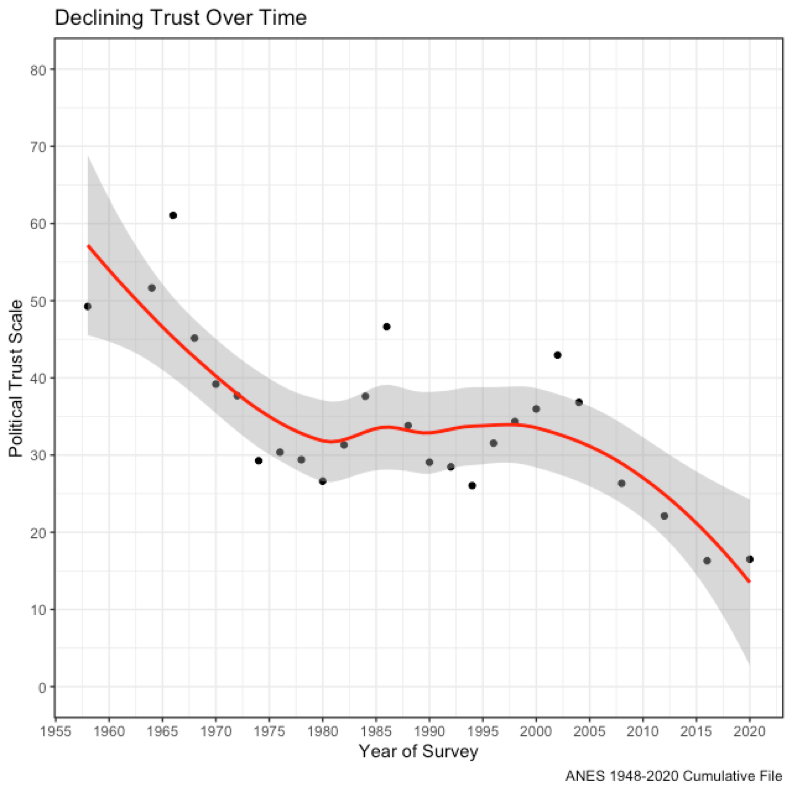
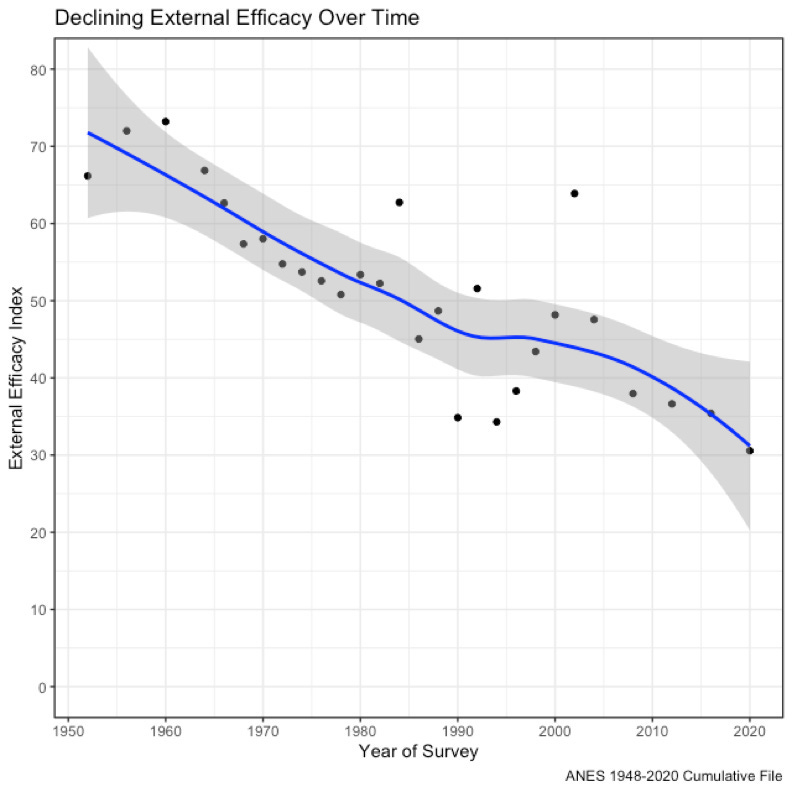
Well-established, decades-long declines in both social capital and trust (toward government, elected officials, institutions, and even toward one another) were bound to be exacerbated by the COVID-19 pandemic. And indeed, 42 percent of all adults surveyed by Pew in June 2021 said they had become less involved with civic groups.
As art imitates life, alienation appears regularly in our art and entertainment.
(See the following two figures following respondents’ trust toward government and external efficacy, or an individual’s sense that government is responsive to their needs. Data comes from the American National Elections Studies cumulative file.)