
“Americans have had a growing sense at some visceral level of disintegrating social bonds.”
Robert Putnam, "Bowling Alone" (2000, p. 367)
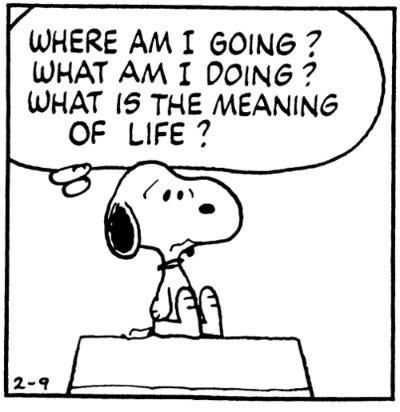
Let me know if you’ve heard this one before.
As a youth I knew of no adult truly satisfied with their lot in life. Cynicism was the civic culture of my childhood in rural upstate New York in the 1990s. Neither of my parents had a college degree, and they subsequently worked — as opposed to having “careers” — my mother paid under the table to clean houses and my father employed mostly part-time as a rural letter carrier for the postal service (a plum job for someone with only a high school degree). Other adult relatives and acquaintances secured what employment there was to be had: seasonal work at the local ski mountain, kiosks at the mall, farms that required new fencing.
None of this is to say that my childhood was particularly difficult or that the Clinton-era economy was not mostly working out for those around me. But irrespective of political leaning or party (my parents steadfast Democrats) the lasting impression I had was a view of government and public institutions as hindrances rather than help. Fire departments, ambulance squads, schools and town councils operated in spite of laborious mandates from distant entities in Albany or Washington DC. The editor/proprietor of what passed for the local newspaper drove a Bronco with a bumper sticker that read “I am the militia.” This provincial mindset was, I could only assume, representative of much of rural America in the 1990s, beset by events like the Oklahoma City bombing and standoffs in Waco and Ruby Ridge. Over the ensuing decades, the general American public has arguably only grown warier of politics and “big government.”
A Global Pandemic
Writing amid the aftermath of the COVID-19 pandemic, it seems self-evident to say that conditions are ripe for many Americans (not to mention others across the globe) to feel cynical, forgotten about, and alone as ties within and between local communities continue to loosen. Academics, albeit not the most affected, are at least aware of this phenomenon given research with snappy titles like Alienated America, Strangers in Their Own Land, The New Minority, and Deaths of Despair. I believe this line of work is onto something, although its authors often skirt the heart of the matter. My argument, and the central contention of this project, is that conditions in the 21st century are increasingly conducive to the atomization of individuals — and this development has major implications for a host of today’s societal woes, from rising morbidity due to drug and alcohol use to open hostilities following national elections or instances of police brutality.
Trends in recent decades propelling this sense of alienation or estrangement include increasingly inequitable social and economic conditions, dwindling government responsiveness to non-wealthy constituencies, and an increasingly strained relationship between people and groups on one hand and political and civil society on the other. These trends are associated with steadily decreasing levels of trust and political efficacy as captured across a multitude of studies and surveys.
These long-term trends come before factoring in the effects of the global pandemic beginning in 2020. The rapidity with which public health measures became politicized early on in the US was impressive, with political divisions between Democrats and Republicans drawing the lines for debate over the most appropriate public health response. In an environment where trust in government, the media, and experts were all in steady decline, the emergence of a very real public health threat—and accompanying dissatisfactory federal response—only served to further erode confidence in those institutions. After two years of pandemic response across both Democratic and Republican administrations, at the state and federal level, fully half of Americans in January 2022 gloomily expected that “the worst is still to come.” In February of that year, the US recorded its one-millionth excess death attributable to the pandemic.
This post is a rewritten excerpt from my 2023 dissertation “The Alienated American.”
References
Gilens, M. (2005). Inequality and democratic responsiveness. Public Opinion Quarterly, 69(5), 778-796.
Gilens, M. (2012). Affluence and influence: Economic inequality and political power in America. Princeton University Press.
Oliver, J. E., & Rahn, W. M. (2016). Rise of the Trumpenvolk: Populism in the 2016 Election. The ANNALS of the American Academy of Political and Social Science, 667(1), 189-206.
Carnes, N. (2013). White-collar government: The hidden role of class in economic policy making. University of Chicago Press.
Putnam, R. D. (2015). Bowling alone: America’s declining social capital. In The city reader (pp. 188-196). Routledge.
Gidron, N., & Hall, P. A. (2020). Populism as a problem of social integration. Comparative Political Studies, 53(7), 1027-1059.
Pew Research Center (January 2022) Biden Starts Year Two With Diminished Public Support and a Daunting List of Challenges. (Accessed 12/6/2023).
Achenbach, J. US ‘excess deaths’ during pandemic surpassed 1 million, with covid killing most but other diseases adding to the toll CDC says. Washington Post, February 15, 2022. (Accessed 12/6/2023).
Camus, A. (1946/2012: page 123). The Stranger. Translated by Matthew Ward. New York: Vintage.
Malato, D. (2021). Civic and social bonds fortify communities, but millions of Americans lack connections that could bolster pandemic recovery. Pew Research and NOROC.
Hetherington, M. J. (2004). Why Trust Matters: Declining Political Trust and the Demise of American Liberalism. Princeton: Princeton University Press.
Hetherington, M. J., & Rudolph, T. J. (2015). Why Washington Won't Work: Polarization, Political Trust, and the Governing Crisis. University of Chicago Press.
Chen, C., and Fan, T. Public Opinion Concerning Governments’ Response to the COVID-19 Pandemic. Edited by George Vousden. PLOS ONE 17, no. 3 (March 2, 2022).
Schmidt, M. S., and Luke B.. Officers’ Injuries, Including Concussions, Show Scope of Violence at Capitol Riot. The New York Times, February 12, 2021, sec. U.S.
LeBlanc, A. and Grayer, P. Trump Says He Will ‘very, Very Seriously’ Consider January 6 Pardons If He Runs and Wins in 2024. CNN, September 1, 2022.
Deane, C., and Gramlich, J. 2020 Election Reveals Two Broad Voting Coalitions Fundamentally at Odds. Pew Research Center (blog). (Accessed August 4, 2023).
Cuthbert, L., and Theodoridis, A. Do Republicans Really Believe Trump Won the 2020 Election? Our Research Suggests That They Do. Washington Post, January 7, 2022.
Nisbet, Robert. The Quest for Community: A Study in the Ethics of Order & Freedom. San Francisco, Calif: Ics Pr, 1953. p. xxiii.