
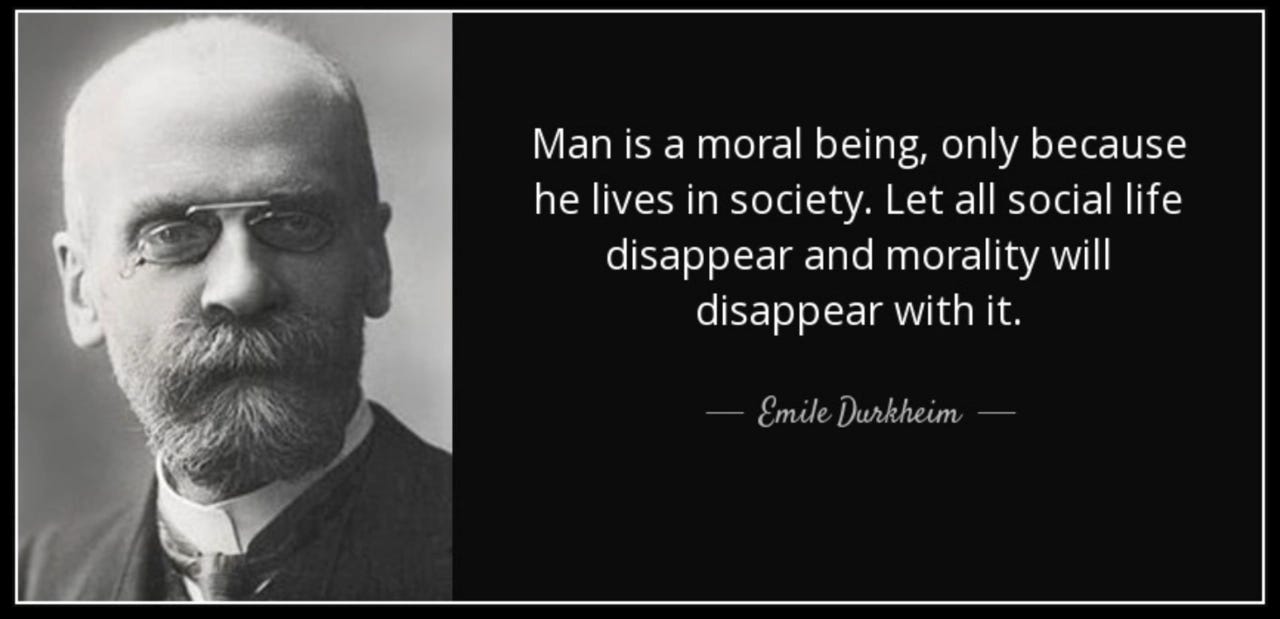
In The Quest for Community Robert Nisbet writes, “by alienation I mean the state of mind that can find a social order remote, incomprehensible, or fraudulent; beyond real hope or desire; inviting apathy, boredom, or even hostility. The individual not only does not feel a part of the social order; he has lost interest in being a part of it” (1953, viii).
Alienation understood as a sense of estrangement from society is pervasive in modern life. The alienated individual perceives themself as a stranger outside looking in, and in this process loses those socially constructed guardrails that give structure and meaning to an individual’s sense of self-identity, belonging, and purpose in life. This disconnect exists today in the workplace and social realm, often extending to politics, where one consequence is to view society as morally ambiguous or in decline. At least, that’s what I argue in my 2023 dissertation in the fields of political science/political psychology.
In the main, space here will be reserved for the publication and translation of original social science research for a general audience — but there may be the occasional discursion on current affairs along the way.
Additional contributors are always welcomed.
All words are written without AI.
If you wish to support this work, paid subscriptions are $5 monthly.
